



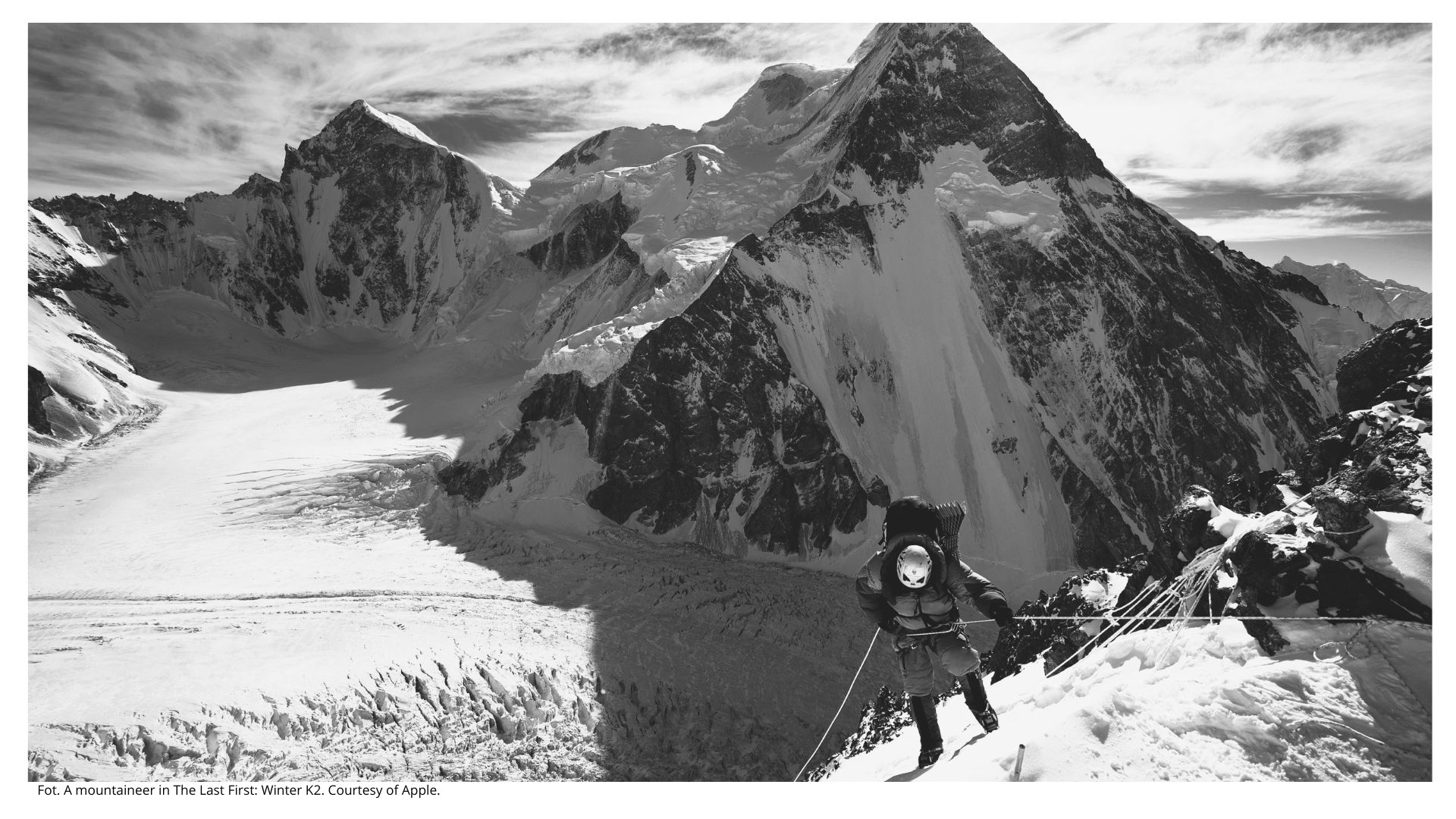
John Snorri Sigurjónsson was fourteen when he first read about K2. It was 1987, just months after one of the deadliest seasons in the mountain’s history. In the summer of 1986, thirteen people died on K2, among them British climbers Alan Rouse and Julie Tullis.
According to Iceland Review, the article Snorri may have come across was titled Suicide or Heroism? Snorri himself later recalled that from the age of fourteen, he followed everything he could find about K2. Over time, the mountain became one of his greatest ambitions.
Thirty years later, that ambition became reality.
On 28 July 2017, John Snorri became the first Icelander to stand on the summit of K2.
The ascent had taken considerably longer than the team had expected. They had planned to reach the summit between eight and ten in the morning, Pakistan time. They did not arrive until around four in the afternoon.
Snorri planted the Icelandic flag on the summit. He had been there for about ten minutes when Vísir reached him. He was exhausted and emotional. He said that when he reached the top, he began to cry.
The joy of reaching the summit was quickly overtaken by a more practical concern: getting back down. His oxygen supply was almost exhausted.
“It was a really difficult expedition,” he said. Asked whether he had enough oxygen for the descent, he replied that, in reality, he did not. He had enough for another hour to an hour and a half; his next supply was waiting at Camp IV.
During the same conversation, the journalist asked whether he wanted to say anything to his wife. Snorri thanked Lína for believing in him throughout and for standing behind him “like a rock.”
Now he had to get down.
From Ölfus to the Eight-Thousanders
John Snorri grew up on the Ingólfshvoll farm in Ölfus with his parents and two sisters. Years later, he described himself simply as a farm boy from Ölfus – a place with virtually no high mountains.
When he came home from school, he would throw his schoolbag in the hallway and leave it there until the next morning. He changed into work clothes and went out to tend the sheep or simply disappeared outdoors. By the age of seven, he already had his own responsibilities with the animals. His father gave him considerable freedom, provided the work was done and he came home at night.
As an adult, Snorri also became involved with Ferðafélag Íslands, the Iceland Touring Association. He led groups on mountains including Hekla and Hvannadalshnúkur, worked with FÍ Ung and took part in the association’s activities for children. In 2017, the association awarded him its gold badge for his achievements in mountaineering.
He had a wife, Lína Móey Bjarnadóttir, and six children.
He climbed Mont Blanc in 2011. Ama Dablam and Elbrus followed, and in 2017 he climbed three eight-thousanders: Lhotse, K2 and Broad Peak. In 2019, he added Manaslu.
During his 2017 K2 expedition, Snorri spoke to Icelandic media from an altitude of around 7,800 metres. He was tired. At that altitude, his body was no longer recovering normally, and he was losing weight.
He said something then that captured the way he viewed the final part of an ascent: “Then it is just the mind that takes you the last stretch up.”
He thought about his family. He spoke about fear, avalanches and the descent without pretending the danger did not exist. At the same time, he believed he was physically prepared and that the team was functioning well. He particularly emphasised the work of the Sherpas breaking trail through deep snow.
The First Winter
K2 remained the last of the fourteen eight-thousanders never to have been climbed in winter.
Snorri decided to return.
But a winter expedition to K2 began long before setting foot on the Baltoro Glacier. It had to be financed. The cost of an expedition of this kind exceeded ISK 20 million. The budget included insurance, high-altitude personnel and funds connected with the possibility of a rescue operation by the Pakistani military. Snorri raised part of the money publicly.
In December 2019, he combined fundraising with training on Esja. The plan was to climb and descend the mountain fourteen consecutive times over approximately 28 hours. People could join him for individual sections, while money for the expedition was raised alongside the challenge.
Snorri made no secret of what he wanted. Asked why he was taking on the challenge, he said he knew he could do it and wanted to see the Icelandic flag on the summit of K2 in winter. He wanted it to be the first flag planted there during a winter ascent.
“The first flag in the world – let it be Icelandic. No one can ever take that away from us.”
It was not a one-off gesture. Speaking to Iceland Review before the expedition, he also described the prospect of the first winter ascent as something that could “put Iceland on the map.”
He did not complete the Esja challenge. After eighteen hours and eight ascents, inflammation developed in his right knee. With two weeks remaining before his departure for Pakistan, Snorri stopped rather than risk an injury before the expedition itself.
He made his first winter attempt on K2 during the 2019/20 season. The expedition was led by Mingma Gyalje Sherpa.
They did not get far up the mountain.
Even the approach to Base Camp was delayed by deep snow on the Baltoro Glacier. Temperatures dropped below –30°C. One of the Sherpas was struck by falling ice and fell into a crevasse, leading to a helicopter evacuation. Mingma Gyalje Sherpa developed pneumonia.
On 5 February 2020, Snorri announced that the expedition was over.
Exactly one year later, on the same date, he would be back on K2.
The Final Days

John Snorri had been at K2 Base Camp since 5 December. Together with Muhammad Ali Sadpara and his son Sajid, he had arrived before the other teams. Over the following weeks, they moved higher on the mountain whenever the weather allowed.
His team was at Base Camp when an opportunity for the first winter ascent appeared. The forecast Snorri received predicted winds of 50–60 km/h on 15 and 16 January. Sajid Sadpara later recalled urging his father and Snorri to go. He felt they were ready. Snorri and Ali, however, decided that an attempt in those conditions would be too dangerous.
The Nepalis went.
On 16 January 2021, ten Nepali climbers gathered just below the summit of K2. They waited for one another and covered the final metres together, singing Nepal’s national anthem. They reached the summit. The last eight-thousander never climbed in winter had finally been climbed.
Snorri was not among them.
For him, this was not simply news of another ascent of K2. The first winter ascent had been the reason he had returned for a second consecutive year, organised a multimillion-króna expedition, raised money and spent months preparing.
The weather, however, proved considerably better than the forecast on which he had based his decision. Snorri later described the conditions on the summit as almost suitable for “sunbathing.”
He sent meteorologist Yan Giezendanner a short message:
“I lost the glory.”
The following day, Giezendanner replied that now there was nothing to do but wait. The weather window had closed, and winds on the summit were expected to rise to around 120 km/h.
The first ascent had already been decided. Snorri was still waiting for conditions that would allow him to make his own winter attempt.
A few days later, Elia Saikaly took a portrait of him with K2 behind him. Snorri liked the photograph so much that he imagined it enlarged on a wall at Keflavík Airport – after his winter ascent.
Another opportunity came before the end of January.
Snorri, Ali and Sajid moved up the mountain. For seventeen hours, they climbed from Base Camp towards Camp III. But the weather began to change earlier than forecast. The wind increased.
The following morning, while they were packing up their tent, the wind tore Ali’s backpack away. They managed to recover some of the equipment, but among the items lost was a mask needed for the summit attempt.
They turned back.
On 29 January, Angela Benavides of ExplorersWeb conducted one of Snorri’s final interviews.
He did not consider the previous attempt a mistake. From his perspective, the team was strong and well prepared. The weather had stopped them.
“We don’t regret trying,” he said.
The failed attempt had also given him new information about his team. They had descended without supplementary oxygen. Snorri believed they had shown themselves that attempting K2 in winter entirely without supplementary oxygen was not beyond their capabilities.
He was already thinking about the next attempt.
The forecasts pointed to another weather window in early February.
During the night of 4–5 February, John Snorri, Muhammad Ali Sadpara, Sajid Sadpara and Chilean climber Juan Pablo Mohr left Camp III for the summit.
For Snorri, it was exactly the same date on which his first winter expedition to K2 had ended one year earlier.
This time, he climbed above 8,000 metres.
Near the Bottleneck, at around 8,200 metres, Sajid developed a problem with his oxygen system. He turned back.
His father, John Snorri and Juan Pablo Mohr continued upwards.
That was the last time Sajid saw them.
He turned around at approximately midday. Around five hours later, he reached Camp III alone and contacted Base Camp. He reported that he had returned while his father, Snorri and Mohr were continuing their ascent. He had no way of contacting them directly.
He stayed at the camp and waited.
He prepared hot water for them and left a light on so that they could find the tent more easily on their return.
They did not come back.
The following morning, Sajid contacted Base Camp again. The weather was deteriorating and, after descending alone from above 8,000 metres and spending the night waiting, he was exhausted. Base Camp told him to begin his descent.
The search began.
Pakistani military helicopters attempted to locate the climbers from the air. Photographs taken from a distance were analysed. The search continued for several days without success.
On 18 February, John Snorri Sigurjónsson, Muhammad Ali Sadpara and Juan Pablo Mohr were officially declared dead by the authorities in Gilgit-Baltistan.
No one knew how far they had climbed after separating from Sajid.
Nor was there proof that they had reached the summit.
What happened next has never been established.
Sajid Returns
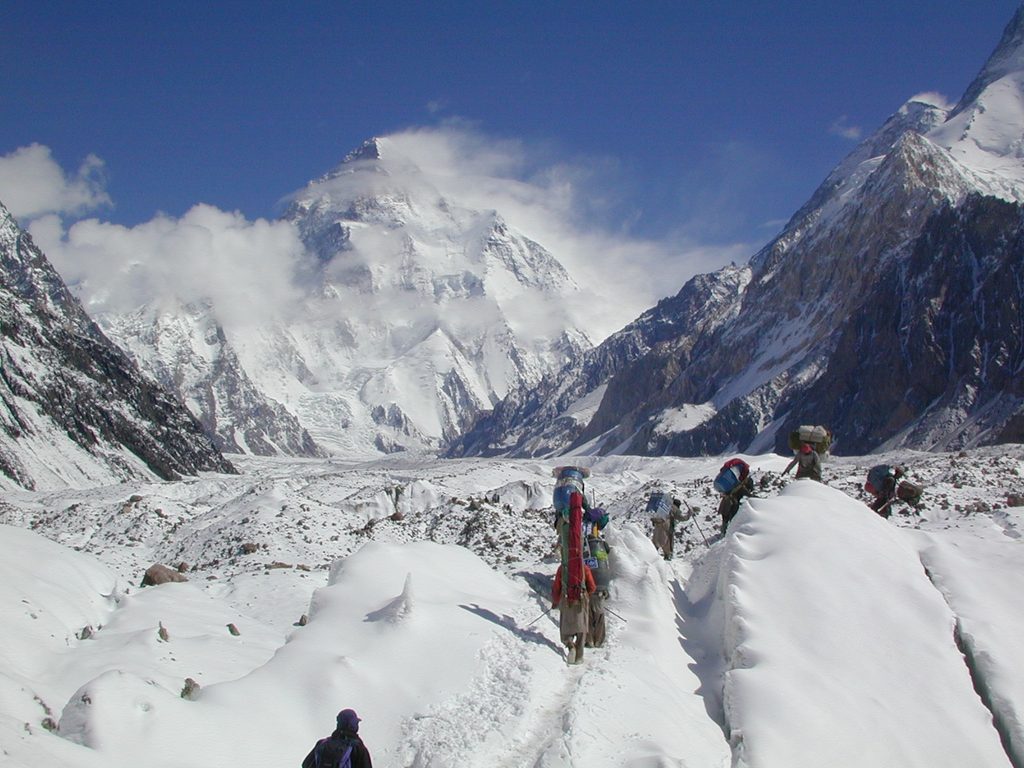
Five months later, Sajid Sadpara returned to K2.
He wanted to find his father and establish what had happened after they separated on 5 February. On 26 July 2021, the bodies of John Snorri, Muhammad Ali Sadpara and Juan Pablo Mohr were found high on the mountain.
Their locations made it possible to reconstruct part of the route they had taken, but did not answer the central question: had they reached the summit before they died?
Sajid believed that his father, Snorri and Mohr had reached the summit and that the accident occurred during the descent. There was, however, no evidence to confirm that account.
In the months that followed, analyses of data and equipment suggested that a summit may have been possible, but the question remained a matter of reconstruction rather than the direct testimony of any of the three climbers.
A GoPro camera was found in the pocket of Snorri’s jacket. Attempts were later made to recover the material stored on it. At least one image from the final file was retrieved, but the camera did not answer the question of whether they had reached the summit.
It was not, however, the only camera recording that winter.
The Cameras Remained
The final winter on K2 was exceptionally well documented.
Elia Saikaly filmed the expedition of John Snorri, Ali Sadpara and Sajid Sadpara. Other climbers and filmmakers on K2 were recording as well – life at Base Camp, preparations, successive rotations higher on the mountain and the climbing itself.
When Amir Bar-Lev began work on The Last First: Winter K2, he was therefore dealing not with a single archive but with material scattered among the people who had been there that winter. His team contacted many of the roughly sixty people who had been on K2 and obtained their footage.
Bar-Lev did not reduce the film to the question of what happened on 5 February. The story of Snorri, Ali and Sajid Sadpara became the axis of a broader account of the 2020/21 winter on K2 – the race for the last great winter first, the money required to mount such expeditions, the differences between Western climbers and Nepali and Pakistani mountaineers, and the ways cameras, social media and commercialisation have changed the culture of high-altitude climbing.
The Story Returns to Reykjavík
Five years later, John Snorri appears on screen in images recorded during his final winter on K2.
The Last First: Winter K2 had its world premiere at the Sundance Film Festival in January 2026. Sajid Sadpara travelled to Park City for the premiere.
Five years earlier, he had been the last person to see Snorri, Ali and Mohr continuing upwards beyond the Bottleneck. Now he was present at the premiere of a film built, in part, from images recorded during that winter.
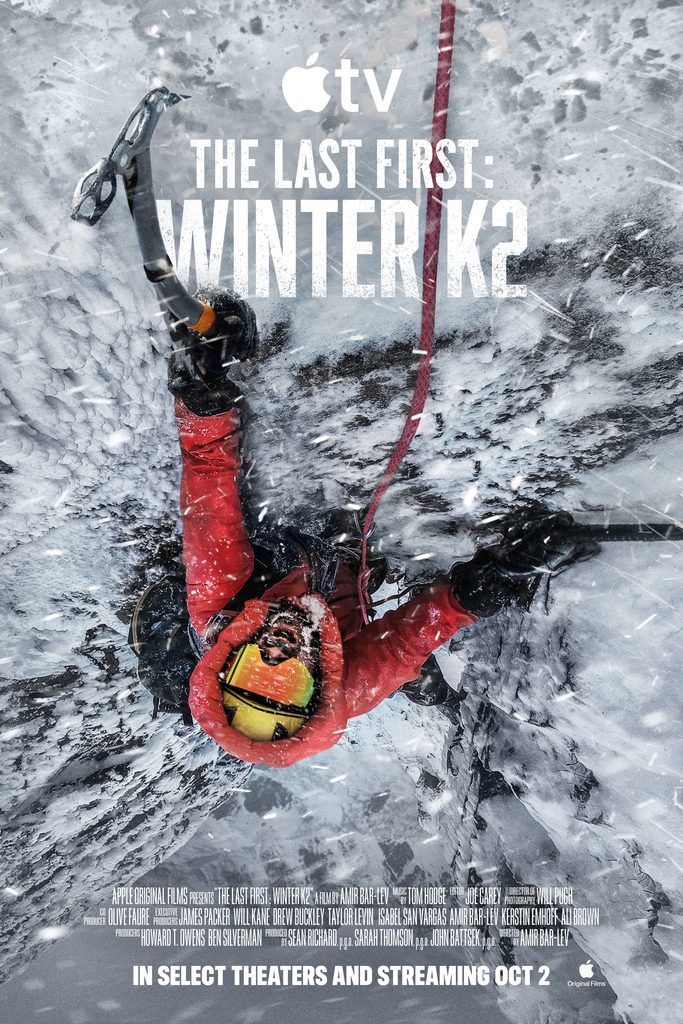
The film does not attempt to contain their story within the question of whether the three climbers reached the summit. Amir Bar-Lev uses it to examine what converged on K2 that winter: people pursuing the last great winter first, commercial expeditions, film crews, money and the growing presence of social media.
Another strand concerns the place of Nepali climbers in the history of high-altitude mountaineering – people who for decades had helped others reach the world’s highest summits and who, on 16 January 2021, put their own names on the first winter ascent of K2.
At Sundance, Sajid was therefore among those watching a record of a winter he had lived through: Base Camp, successive attempts, the competition for the first ascent, and people approaching the same mountain from very different positions. Bar-Lev’s film was assembled from footage shot by the participants themselves and from later interviews with people who had been there.
In September, the film returns to Iceland. The Last First: Winter K2 opens the Reykjavík International Film Festival.
John Snorri was 47. He left behind his wife, Lína Móey, and six children.
What remains are photographs, conversations conducted from thousands of metres above sea level, footage from Base Camp and Sajid’s account – the only member of the four-man summit team to return from the mountain.
In 2017, Snorri became the first Icelander to stand on the summit of K2. He returned for his first winter attempt in 2020 and turned back. A year later, he tried again. By the time he set out for the summit on 5 February, the first winter ascent had already entered history under the names of ten Nepali climbers.
How far he reached that day remains unknown. What is known is that K2 – the mountain he first read about as a fourteen-year-old – became the final place of his life. Five years later, the record of that winter returns to Iceland in The Last First: Winter K2.
──────────────
REYKJAVÍK INTERNATIONAL FILM FESTIVAL 2026
The Last First: Winter K2 will open this year’s Reykjavík International Film Festival (RIFF).
More information: Reykjavík International Film Festival
──────────────
SELECTED SOURCES
Iceland Review – “Closer to the Stars”
ÍSALP – Ársrit 2017
Vísir – interview with John Snorri from the summit of K2, 28 July 2017
Ferðafélag Íslands – tribute to John Snorri
ExplorersWeb – Angela Benavides, interview with John Snorri, 29 January 2021
American Alpine Journal – “K2 in Winter”
Elia Saikaly – “Winter K2 2021”
If you found this article valuable and would like O Zmierzchu i Świcie to continue publishing independent editorial content, you can support the Magazine Development Fund.
For more information, visit ABOUT THE MAGAZINE .
Content published in O Zmierzchu i Świcie is intended for educational and general informational purposes. It does not constitute medical, psychological or nutritional advice and is not a substitute for consultation with a physician or another qualified professional.