TREMORS / Skjálftar brings together three projects by Odysseas Chloridis: Enceladus, Voice of Rocks and Burning in Water. Photography is the starting point, but Chloridis rarely leaves the image untouched. He works with the photograph as a physical object, using different printing processes, collage, drawing, cutting and direct interventions into its surface. Enceladus, for example, combines inkjet and C-prints with laser prints, gelatin silver prints and Polaroids.
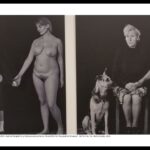
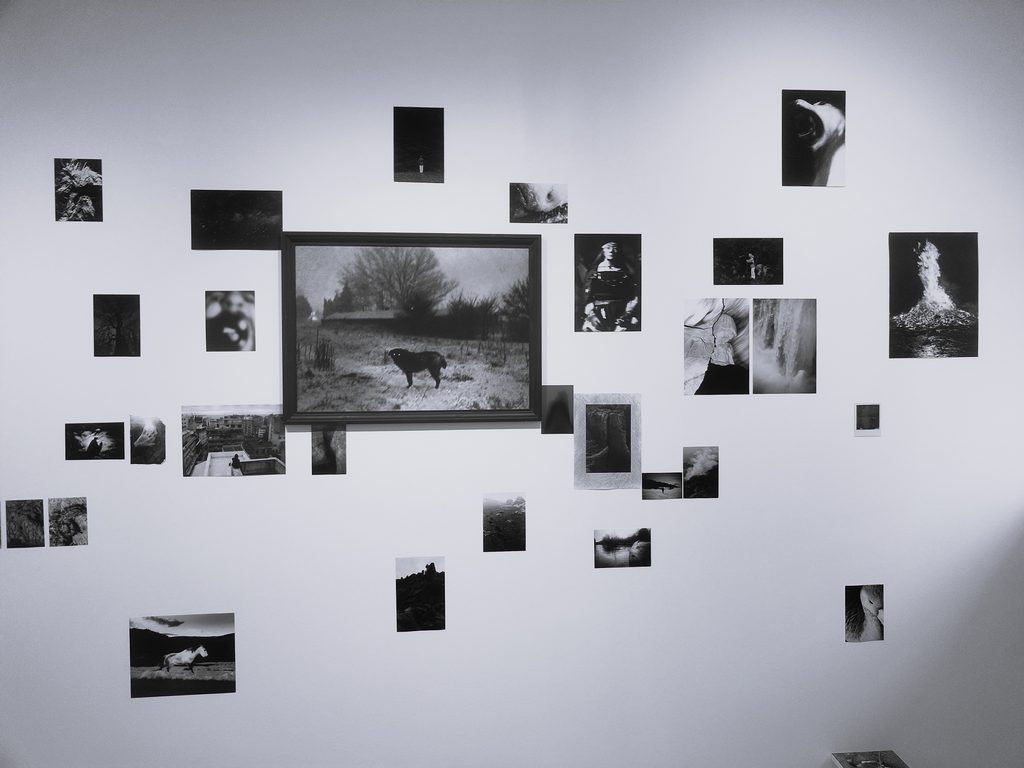
The largest installation takes the form of a loose, fragmented visual sequence. Small photographs surround a larger framed image of a dog standing in a wintry landscape. People, animals, fire, rocks, water, fragments of bodies and landscapes appear around it, alongside images that resist immediate recognition. There is no conventional photographic narrative, no clear beginning or end. The arrangement feels closer to the way memory works: images surface next to one another without immediately revealing what connects them.
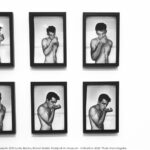
Elsewhere, the photograph is quite literally taken apart. Dozens of cut-up images are spread across a table: faces, objects, colours and fragments of scenes removed from their original context. What happens to a photograph as a record of a particular moment when that context is removed? What remains when only a fragment survives?
Voice of Rocks introduces a different visual rhythm. The loose arrangement is replaced by a grid of photographs of rocks from the artist’s collection. Removed from the landscapes they came from, the stones are presented almost as individual portraits. Other works carry more direct traces of the artist’s hand, with lines and drawings applied to the photographic image and left deliberately visible.
This approach raises a fundamental question: does a photograph have to remain a document? Chloridis treats the image as an evolving surface and explores what a photograph can carry beyond the information recorded by the camera. The exhibition text expands this territory to include memory, migration, nature, animism, uncertainty and experiences that lie beyond immediate visibility.
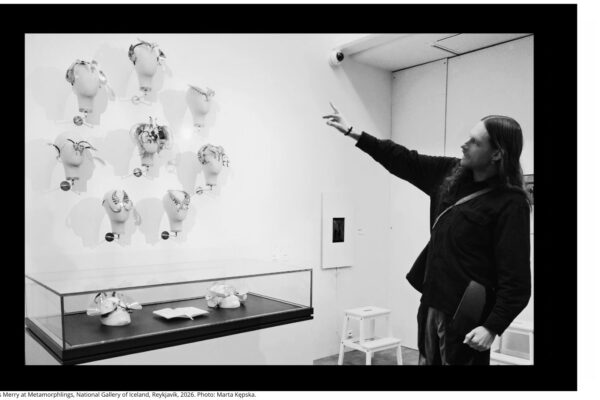
The physical setting at hafnar.space matters too. TREMORS is a small, intimate exhibition. Many of the photographs are tiny; some are gathered into dense arrangements, while others are given more space. Looking at them requires movement. You come close to inspect a single image, step back to take in the wall, then move between the three projects looking for connections.
Music plays a significant part in the atmosphere. It runs quietly through the space, creating tension and giving the exhibition its own pace. Rather than simply accompanying the photographs, it affects how long you stay with them and how you move through the rooms. In an exhibition of this scale, sound becomes part of the way the space itself is experienced.
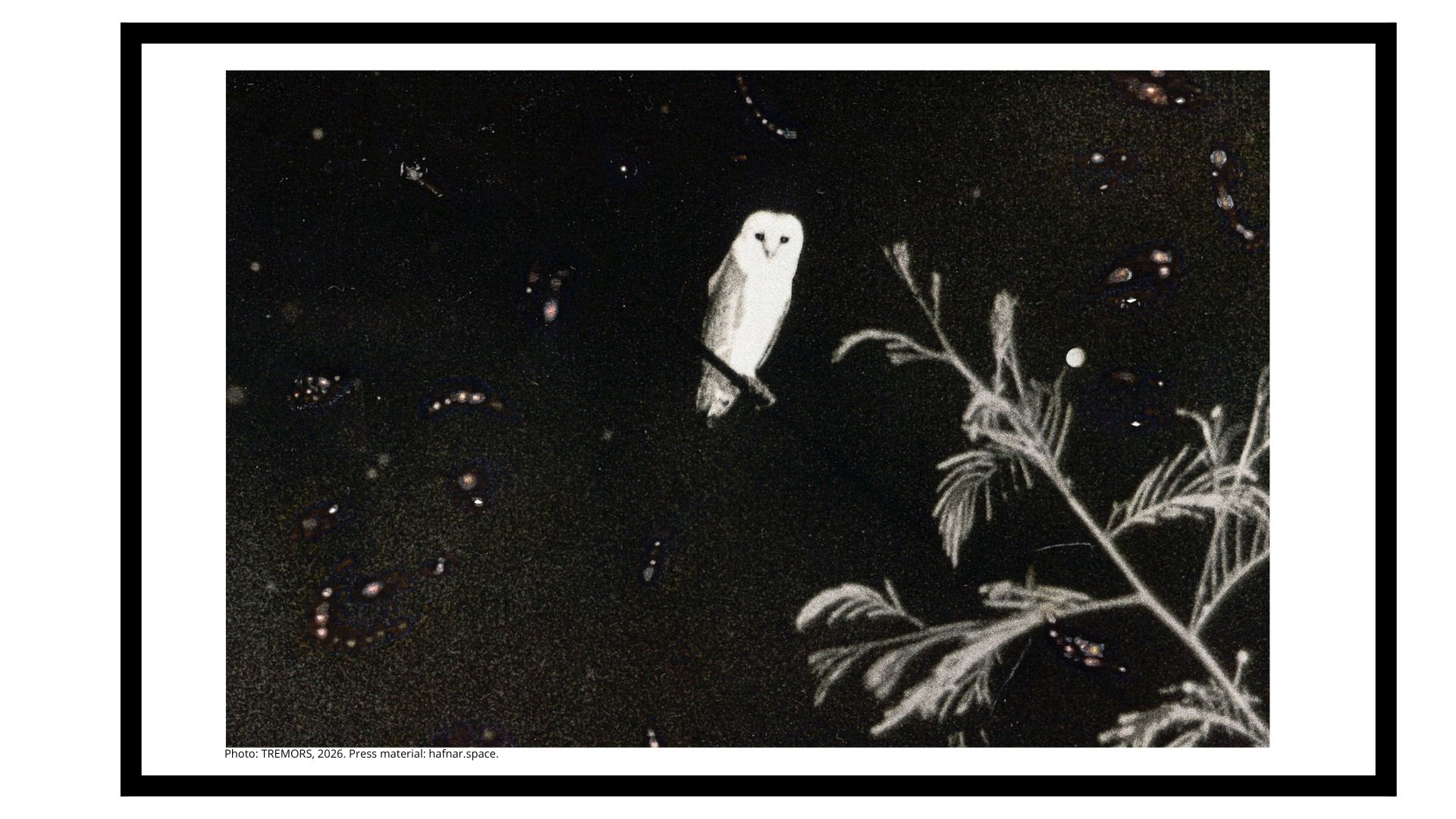
The photograph of an owl, also used to promote TREMORS, is particularly striking. A pale figure emerges from near-total darkness. It has an immediate presence and creates its own sense of tension without requiring much explanation.
The contrast between images with such an immediate presence and the more fragmented structure of the exhibition raises further questions. Where do the “tremors” actually occur? In the physical disruption of the photographs? In the collision of images from different places and moments? Or in the viewer’s attempt to connect them?
Does the small scale of a photograph bring us closer to it, or make it easier for the image to disappear among the others? Does fragmentation resemble the way memory returns – incomplete, selective, detached from its original sequence? And how much of a photograph’s meaning belongs to the image itself, and how much is created between one image and the next?
TREMORS leaves those questions with the viewer.
──────────────
hafnar.haus Tryggvagata 17
101 Reyjavik Iceland
If you found this article valuable and would like O Zmierzchu i Świcie to continue publishing independent editorial content, you can support the Magazine Development Fund.
For more information, visit ABOUT THE MAGAZINE .
Content published in O Zmierzchu i Świcie is intended for educational and general informational purposes. It does not constitute medical, psychological or nutritional advice and is not a substitute for consultation with a physician or another qualified professional.